finelybook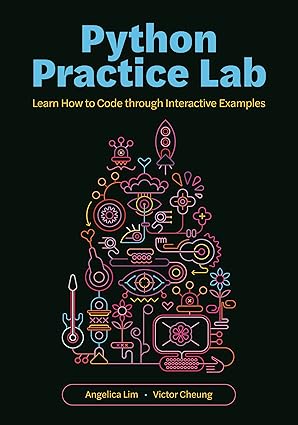
Python Practice Lab: Learn How to Code through Interactive Examples
Author(s): Professor Angelica Lim (Author), Professor Victor Cheung (Author)
- Publisher finelybook 出版社: Princeton University Press
- Publication Date 出版日期: March 31, 2026
- Language 语言: English
- Print length 页数: 160 pages
- ISBN-10: 0691243603
- ISBN-13: 9780691243603
Book Description
A guide to learning basic programming by writing fun, working programs that gradually become more complex
This classroom-tested, workbook-style text teaches basic programming by guiding readers to write Python programs that mimic interactive chatbots. Unlike textbooks with opaque examples explained in dry, monotonous code, Python Practice Lab engages readers immediately, with more than thirty motivating and hands-on examples. Readers learn by writing fun, working programs that gradually become more difficult as new concepts are introduced. Most exercises are open ended, promoting creativity in the process of learning. Along with coding practice, the book offers brief introductions to a range of other topics in computer science, including recommendation systems, computer vision, and big data, and relates these subjects to the programming concepts covered in the book. Python Practice Lab will be an essential resource for anyone who wants to learn to program, instructors teaching Python to beginners, and students who want to supplement their coursework by building complete and functional programs.
- Uses natural language and text strings rather than math as the main building blocks for learning about program structure
- Rewrites code comprehension exercises in equivalent code with inclusive and approachable variables rather than terse, single-letter variables
- Challenges readers to write a full program in each chapter
- Presents a selection of projects at the end of the book that integrates the concepts introduced in previous chapters
Editorial Reviews
Review
“I found this book to be a highly engaging and practical resource for introducing fundamental concepts of computer science, particularly through the lens of interactive chatbots, which could instantly prove to be an attraction to learners. The book is quite hands-on and offers a problem-solving approach that heightens learner engagement”—
Aakash Tyagi, Texas A&M University“This book encourages students to get their hands dirty—to start programming and playing with code on day one. There is a nice narrative flow that introduces a task and then introduces more Python to enable students to accomplish enhancements to the initial task. The tone is welcoming and encouraging—you can feel the energy of the authors in the text.”—
Anne Bracy, Cornell University